

Learning a second language is not just about vocabulary lists, grammar rules, or perfect pronunciation. It begins much earlier and much deeper…with your brain. The most successful language learners inherently understand how their mind works—its habits, its shortcuts, and its blind spots. When we learn how to harness our own brain, language acquisition becomes faster, smoother, and far more enjoyable.
Know Your Brain First
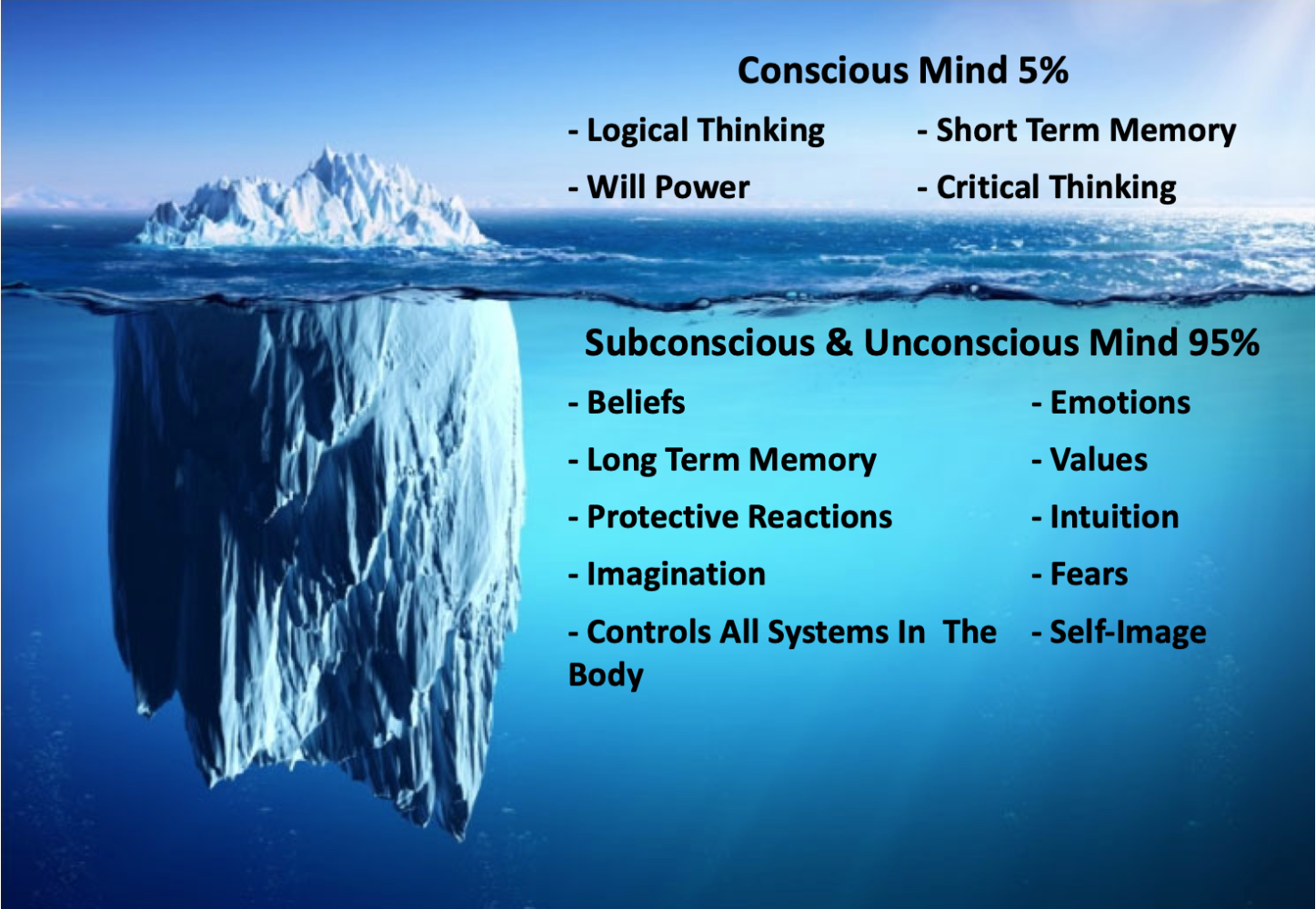
Did you know that roughly 95% of our brain’s activity is subconscious while only 5% is conscious? What does this mean? By the time we are 35 years old, most of what we do and say is unconscious (behaviour, skills, emotional reactions, etc). This means that we are mostly on auto-pilot. So what does this have to do with language learning?
Before diving into French verbs, English vocabulary, or Italian idioms, it helps to understand the operating system behind all learning – the human brain. Our brain is constantly processing, filtering, and storing information. But it doesn’t treat all information equally. It prioritizes what we feel, think, repeat, and believe. And most of this processing happens below the surface.
The Power of the Subconscious (95% of the Brain’s Activity)
Much of our learning happens without conscious effort. When you learn a new language, your subconscious is constantly picking up patterns, sounds, structures, and associations long before you become aware of them.
This is why:
- You suddenly recognize a word you don’t remember learning.
- A phrase “feels” right or wrong.
- You pick up accents or intonation effortlessly over time.
The subconscious is your silent learning partner. But it needs the right environment.
Affirmations: The Brain Believes What You Tell It
The way you speak to yourself shapes your identity, your confidence, and ultimately your learning outcomes.
Positive affirmations like:
- “I can do this.”
- “My brain takes in new languages easily.”
- “Mistakes are part of the process, with repetition I can overcome any barrier.”
- “Every day my English gets better and better“
help unlock motivation and reduce mental resistance.
Negative affirmations like:
- “I’m terrible at languages.”
- “I’m too old to learn.”
- “This is too hard for me.”
- “I will never get better…”
become subconscious instructions that limit what you believe you are capable of learning, and so getting better at a new language becomes a losing battle. Any time we assert ‘I am…’ anything, we pound this information into our subconscious and it becomes part of our identity. Don’t feel desperate or stressed when it comes to your second language, be curious, be willing to make mistakes, see it as fun and lighthearted, not a cumbersome task or obligation.
Changing Your Thought Patterns
Language learning requires a shift not just in behaviour but in mindset. When you change how you think, you change your brain’s learning environment.
Instead of:
- focusing on mistakes,
- comparing yourself to others,
- or expecting instant results,
train your brain to:
- notice small improvements,
- appreciate progress,
- and stay curious.
This shift reduces stress (which blocks learning) and increases dopamine (which enhances learning).
Repetition: The Brain’s Favorite Learning Tool
If the subconscious is the silent partner, repetition is the glue.
Repetition strengthens neural pathways. Every time you repeat a word, a sound, or a structure, the connection becomes stronger and faster. This is why spaced repetition, daily exposure, and small, consistent practice sessions give better, longer lasting results than cramming.
Your brain loves patterns—and repetition creates the patterns. So make repetition intentional and welcome it, don’t dread it.
Final Thoughts
Learning a new language is ultimately an inner transformation. When you understand your brain’s subconscious power, the role of affirmations, and the science of repetition, you create the ideal conditions for learning.